

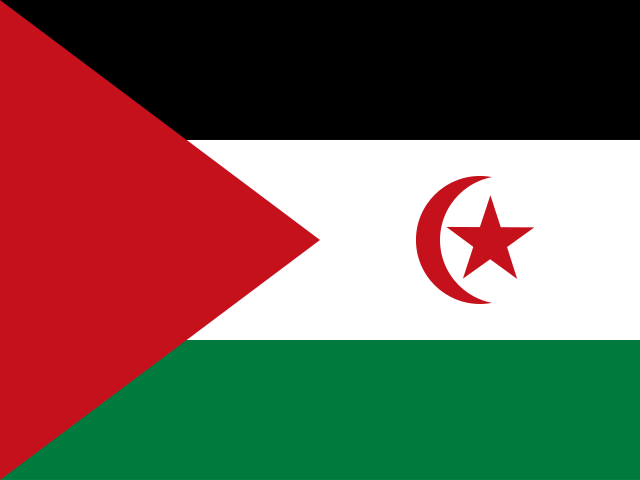
Western Sahara
Population
Area
GDP
GDP Per Capita
Quick FAQs
Region
Capital
ISO 3166
Government Type
Language
ON THIS PAGE
About Western Sahara
Western Sahara is located in Northern Africa, bordering the North Atlantic Ocean between Mauritania and Morocco, with terrain that is mostly low, flat desert with large areas of rocky or sandy surfaces. The climate is arid desert, and the territory has no officially designated capital, with Laayoune serving as the largest city. Western Sahara has a population of approximately 652,271 people who speak Arabic, Spanish, French, and Berber.
Western Sahara has a small market-based economy whose main industries are fishing, phosphate mining, tourism, and pastoral nomadism, and the territorial status remains unresolved and contested between Morocco and the Polisario Front. The territory’s arid desert climate makes sedentary agriculture difficult, and much of its food is imported. The Moroccan Government administers Western Sahara’s economy and is a key source of employment, infrastructure development, and social spending.
Geography & Environment
Geographic Location
Geographic Coordinate
Geographic Area
Climate
Terrain
Natural Hazards
Natural Resources
Geography Note
People & Society
Ave. Life Expentancy at Birth
Urbanization
Population Growth Rate
Literacy Rate
Health Expendeture
Education Expenditure
Languages
Religions
Government
Country Name
conventional short form: Western Sahara
former: Rio de Oro, Saguia el Hamra, Spanish Sahara
etymology: self-descriptive name specifying the territory's western location on the African continent's vast desert
Economy
Economic Overview
Western Sahara has a small market-based economy whose main industries are fishing, phosphate mining, tourism, and pastoral nomadism. The territory's arid desert climate makes sedentary agriculture difficult, and much of its food is imported. The Moroccan Government administers Western Sahara's economy and is a key source of employment, infrastructure development, and social spending in the territory. ++ Western Sahara's unresolved legal status makes the exploitation of its natural resources a contentious issue between Morocco and the Polisario. Morocco and the EU in December 2013 finalized a four-year agreement allowing European vessels to fish off the coast of Morocco, including disputed waters off the coast of Western Sahara. As of April 2018, Moroccan and EU authorities were negotiating an amendment to renew the agreement. ++ Oil has never been found in Western Sahara in commercially significant quantities, but Morocco and the Polisario have quarreled over rights to authorize and benefit from oil exploration in the territory. Western Sahara's main long-term economic challenge is the development of a more diverse set of industries capable of providing greater employment and income to the territory. However, following King MOHAMMED VI's November 2015 visit to Western Sahara, the Government of Morocco announced a series of investments aimed at spurring economic activity in the region, while the General Confederation of Moroccan Enterprises announced a $609 million investment initiative in the region in March 2015.