

Turks and Caicos Islands
Population
Area
GDP
GDP Per Capita
Quick FAQs
Region
Capital
ISO 3166
Government Type
Language
ON THIS PAGE
About Turks and Caicos Islands
Turks and Caicos Islands are two island groups in the North Atlantic Ocean, southeast of The Bahamas and north of Haiti, consisting of low, flat limestone formations with extensive marshes and mangrove swamps. The climate is tropical and marine, moderated by trade winds, with sunny and relatively dry conditions. Grand Turk serves as the capital, and the islands have a population of approximately 60,439 people who speak English.
Turks and Caicos Islands have a British Caribbean island territorial economy centered on tourism and offshore financial services. The country’s natural resources include spiny lobster and conch. The economy and its tourism industry were hit hard by COVID-19 disruptions, and the islands face increasing unemployment and a negative trade balance while being dependent on fossil fuels.
Geography & Environment
Geographic Location
Geographic Coordinate
Geographic Area
Climate
Terrain
Natural Hazards
Natural Resources
Geography Note
People & Society
Ave. Life Expentancy at Birth
Urbanization
Population Growth Rate
Literacy Rate
Health Expendeture
Education Expenditure
Languages
Religions
Government
Country Name
conventional short form: Turks and Caicos Islands
abbreviation: TCA
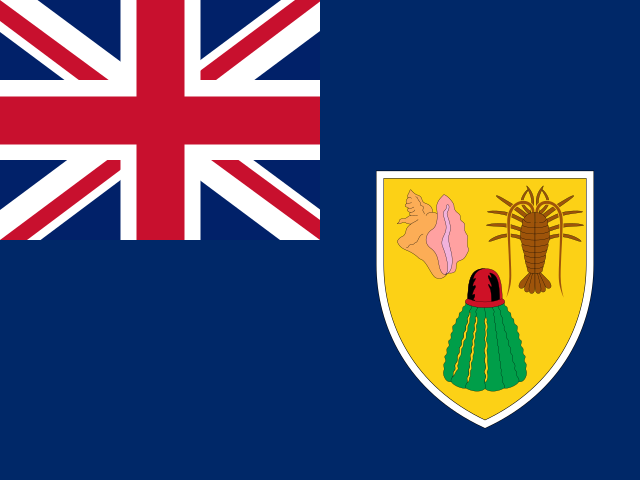
etymology: the Turks Islands are named after the Turk's cap cactus, which is native to the islands and appears on the flag and coat of arms; the name Caicos may derive from caya hico, a phrase meaning “string of islands” in the Lucayan (Arawak) language, or from the Spanish word cayo, meaning "rock"
Economy
Economic Overview
British Caribbean island territorial economy; GDP and its tourism industry hit hard by COVID-19 disruptions; major biodiversity locale; US dollar user; fossil fuel dependent; negative trade balance; increasing unemployment