

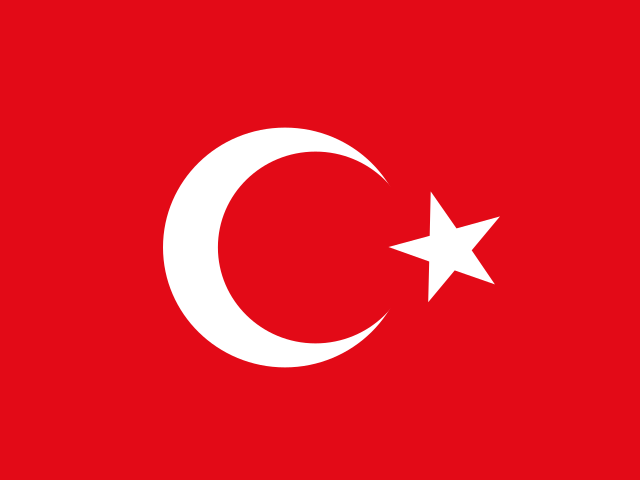
Turkey
Population
Area
GDP
GDP Per Capita
Quick FAQs
Region
Capital
ISO 3166
Government Type
Language
ON THIS PAGE
About Turkey
Turkey is located in Southeastern Europe and Southwestern Asia, bordering the Black Sea between Bulgaria and Georgia, and bordering the Aegean and Mediterranean Seas between Greece and Syria. The country features a high central plateau known as Anatolia, narrow coastal plains, and several mountain ranges, with a temperate climate of hot, dry summers and mild, wet winters that is harsher in the interior. Ankara serves as the capital, and Turkey has a population of approximately 84.63 million people who speak Turkish and Kurdish.
Turkey has an upper-middle-income, diversified economy that is industrializing while maintaining a large agricultural base, with key sectors including textiles, automobiles, electronics, mining, steel, petroleum, construction, and food processing. The country is rich in natural resources such as coal, iron ore, copper, chromium, antimony, mercury, gold, barite, borate, limestone, marble, and hydropower. Turkey faces economic challenges including high inflation, high interest rates, and foreign debt that pose risks to financial stability.
Geography & Environment
Geographic Location
Geographic Coordinate
Geographic Area
Climate
Terrain
Natural Hazards
Natural Resources
Geography Note
People & Society
Ave. Life Expentancy at Birth
Urbanization
Population Growth Rate
Literacy Rate
Health Expendeture
Education Expenditure
Languages
Religions
Government
Country Name
conventional short form: Turkey
local long form: Turkey Cumhuriyeti
local short form: Turkey
etymology: the name means "Land of the Turks"
Economy
Economic Overview
upper-middle-income, diversified Middle Eastern economy; industrializing economy that maintains large agricultural base; key energy, tourism, and construction sectors; high inflation, interest rates, and foreign debt pose risk to financial stability