

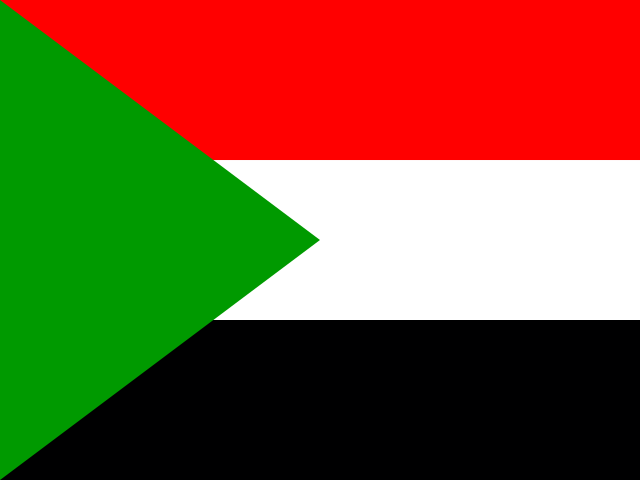
Sudan
Population
Area
GDP
GDP Per Capita
Quick FAQs
Region
Capital
ISO 3166
Government Type
Language
ON THIS PAGE
About Sudan
Sudan is located in north-eastern Africa, bordering the Red Sea between Egypt and Eritrea, with the Nile serving as the country’s primary water source. The landscape is generally flat and featureless with desert dominating the northern region, and the country experiences a hot and dry arid climate with a rainy season that varies by region from April to November. Khartoum is the capital, and Sudan has a population of approximately 50.47 million people who speak Arabic, English, Nubian, Ta Bedawie, and Fur.
Sudan has a low-income Sahel economy that has been devastated by an ongoing civil war, with major impacts on rural income, industrial production, agricultural supply chains, and commerce. Key industries include oil, cotton ginning, textiles, cement, edible oils, sugar, petroleum refining, and pharmaceuticals. The country possesses natural resources such as petroleum, iron ore, copper, chromium ore, zinc, tungsten, mica, silver, gold, and hydropower. The economy faces severe challenges including hyperinflation, currency depreciation, and worsening food access and humanitarian conditions.
Geography & Environment
Geographic Location
Geographic Coordinate
Geographic Area
Climate
Terrain
Natural Hazards
Natural Resources
Geography Note
People & Society
Ave. Life Expentancy at Birth
Urbanization
Population Growth Rate
Literacy Rate
Health Expendeture
Education Expenditure
Languages
Religions
Government
Country Name
conventional long form
conventional short form
local long form
local short form
former
etymology
Economy
Economic Overview
low-income Sahel economy devastated by ongoing civil war; major impacts on rural income, basic commodity prices, industrial production, agricultural supply chain, communications and commerce; hyperinflation and currency depreciation worsening food access and humanitarian conditions