

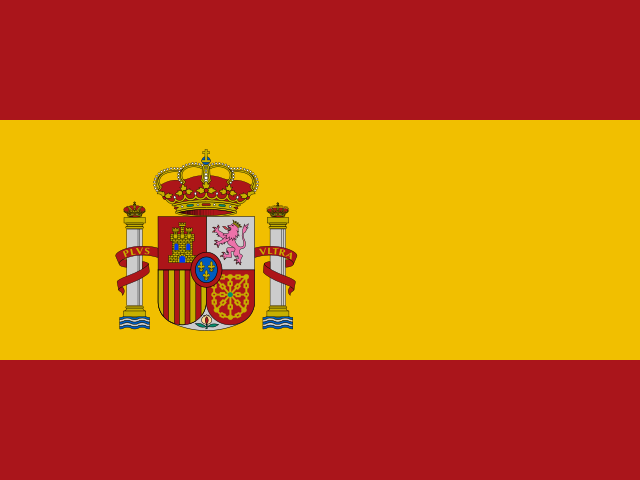
Spain
Population
Area
GDP
GDP Per Capita
Quick FAQs
Region
Capital
ISO 3166
Government Type
Language
ON THIS PAGE
About Spain
Spain is located in Southwestern Europe, bordering the Mediterranean Sea, North Atlantic Ocean, Bay of Biscay, and Pyrenees Mountains, southwest of France. The country features a large, flat to dissected plateau surrounded by rugged hills, with the Pyrenees Mountains in the north, and has a temperate climate with clear, hot summers and cold, cloudy winters in the interior while coastal areas are more moderate and cloudy. Madrid serves as the capital, and Spain has a population of approximately 47.28 million people who primarily speak Castilian Spanish, along with regional languages such as Catalan, Galician, and Basque.
Spain has a high-income, core-EU and eurozone economy driven by strong growth in public consumption, tourism, and other service exports, despite a tight labor market with high structural unemployment. Key industries include textiles and apparel, food and beverages, metals and metal manufactures, chemicals, shipbuilding, automobiles, machine tools, tourism, and pharmaceuticals. The country is rich in natural resources such as coal, lignite, iron ore, copper, lead, zinc, uranium, tungsten, mercury, pyrites, magnesite, fluorspar, gypsum, sepiolite, kaolin, potash, and hydropower, and it has significant arable land supporting a diverse agricultural sector producing olives, pork, grapes, wheat, and tomatoes.
Geography & Environment
Geographic Location
Geographic Coordinate
Geographic Area
Climate
Terrain
Natural Hazards
Natural Resources
Geography Note
People & Society
Ave. Life Expentancy at Birth
Urbanization
Population Growth Rate
Literacy Rate
Health Expendeture
Education Expenditure
Languages
Religions
Government
Country Name
conventional short form: Spain
local long form: Reino de España
local short form: España
etymology: derivation of the name España is uncertain; the Basque words ezpain or espan ("edge," as in a river bank) are possible sources, or the Punic word span, meaning "rabbit;" some academics tie it to the god Hesperus from Greco-Roman mythology
Economy
Economic Overview
high-income, core-EU and eurozone economy; strong growth driven by public consumption, tourism, and other service exports; tight labor market despite high structural unemployment; efforts to narrow persistent fiscal deficits through tax and spending measures; high but declining unemployment supported by job growth and immigration