

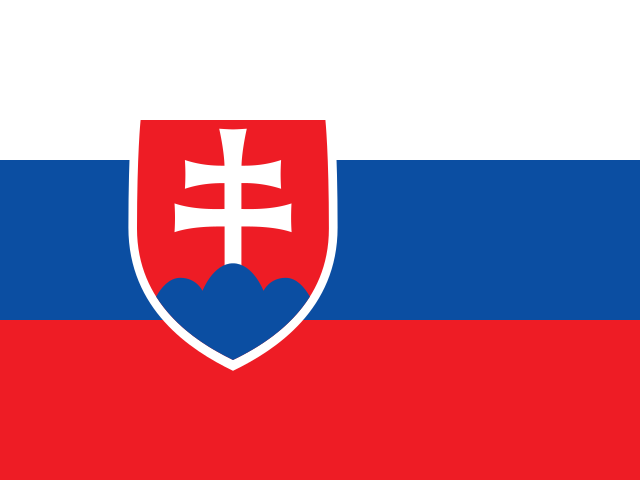
Slovakia
Population
Area
GDP
GDP Per Capita
Quick FAQs
Region
Capital
ISO 3166
Government Type
Language
ON THIS PAGE
About Slovakia
Slovakia is a country located in Central Europe, south of Poland, covering an area of approximately 49,035 square kilometers. As of 2024, Slovakia has a population of about 5.56 million, with Slovak as the official language alongside Hungarian and Roma. The country features rugged mountains in the central and northern part and lowlands in the south, with a temperate climate of cool summers and cold, cloudy, humid winters. Bratislava serves as the capital, and the government operates as a parliamentary republic.
Slovakia has a high-income EU and eurozone economy with a GDP of $141.78 billion and a GDP per capita of $40,300, driven by automobiles, metal and metal products, electricity, gas, coke, oil, nuclear fuel, chemicals, synthetic fibers, wood and paper products, machinery, earthenware and ceramics, textiles, electrical and optical apparatus, rubber products, food and beverages, and pharmaceuticals. Key agricultural products include wheat, sugar beets, maize, milk, barley, rapeseed, sunflower seeds, potatoes, soybeans, and pork, while natural resources include lignite, small amounts of iron ore, copper and manganese ore, salt, and arable land. The unemployment rate is 5.4% as of 2025, with a life expectancy of 78.4 years. Manufacturing and exports are led by the automotive sector, with growth supported by private consumption and public investment from EU funds.
Geography & Environment
Geographic Location
Geographic Coordinate
Geographic Area
Climate
Terrain
Natural Hazards
Natural Resources
Geography Note
People & Society
Ave. Life Expentancy at Birth
Urbanization
Population Growth Rate
Literacy Rate
Health Expendeture
Education Expenditure
Languages
Religions
Government
Country Name
conventional short form: Slovakia
local long form: Slovenska republika
local short form: Slovensko
etymology: the country takes its name from the local Slav ethnic group; the origin of the group's name is unclear, although early forms were used in Medieval Latin (Sclavus) and Byzantine Greek (Sklabos)
Economy
Economic Overview
high-income EU and eurozone economy; manufacturing and exports led by automotive sector; growth supported by private consumption and public investment from EU funds, tempered by trade risks; increased taxes and withdrawal of energy subsidies contributing to rising but manageable inflation; strong labor demand and influx of foreign labor offsets aging workforce