

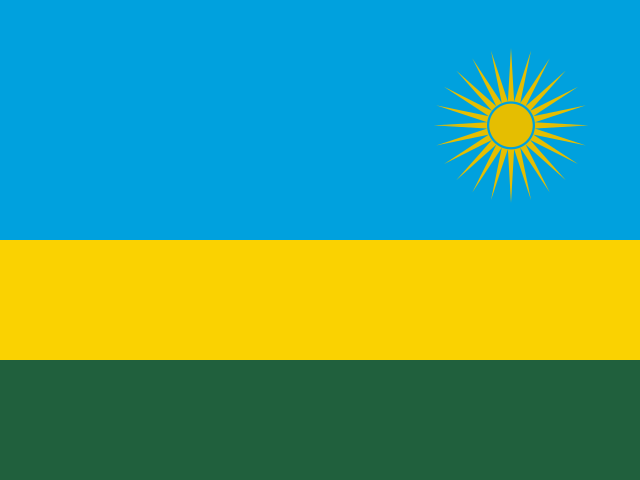
Rwanda
Population
Area
GDP
GDP Per Capita
Quick FAQs
Region
Capital
ISO 3166
Government Type
Language
ON THIS PAGE
About Rwanda
Rwanda is a country located in Central Africa, east of the Democratic Republic of the Congo and north of Burundi, covering an area of approximately 26,338 square kilometers. As of 2024, Rwanda has a population of about 13.62 million, with Kinyarwanda, French, English, and Swahili as official languages. The country is mostly grassy uplands and hills with mountainous relief declining from west to east, featuring a temperate climate with two rainy seasons and mild temperatures in the mountains. Kigali serves as the capital, and the government operates as a presidential republic.
Rwanda has a low-income Sub-Saharan economy with a GDP of $14.25 billion and a GDP per capita of $3,300, driven by cement, agricultural products, small-scale beverages, soap, furniture, shoes, plastic goods, textiles, and cigarettes. Key agricultural products include bananas, cassava, sweet potatoes, plantains, potatoes, maize, beans, pumpkins and squash, taro, and sorghum, while natural resources include gold, cassiterite, wolframite, methane, hydropower, and arable land. The unemployment rate is 11.4% as of 2025, with a life expectancy of 68 years and a literacy rate of 78.8%. Rwanda is investing in major infrastructure projects including the Bugesera Airport, though it faces challenges of lack of economic diversification, high inflation, and a wide current account deficit.
Geography & Environment
Geographic Location
Geographic Coordinate
Geographic Area
Climate
Terrain
Natural Hazards
Natural Resources
Geography Note
People & Society
Ave. Life Expentancy at Birth
Urbanization
Population Growth Rate
Literacy Rate
Health Expendeture
Education Expenditure
Languages
Religions
Government
Country Name
conventional long form
conventional short form
local long form
local short form
former
etymology
Economy
Economic Overview
low-income Sub-Saharan economy; services, industry, and agriculture sectors driving growth; increased government spending on human capital, energy, and healthcare; major infrastructure projects including the Bugesera Airport intended to support long-term growth; challenges include lack of economic diversification, high inflation, and wide current account deficit