

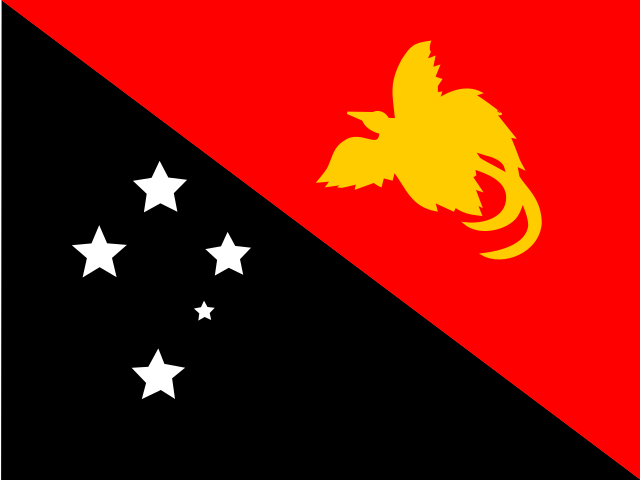
Papua New Guinea
Population
Area
GDP
GDP Per Capita
Quick FAQs
Region
Capital
ISO 3166
Government Type
Language
ON THIS PAGE
About Papua New Guinea
Papua New Guinea is a country located in Oceania, east of Indonesia, covering an area of approximately 462,840 square kilometers. As of 2025, Papua New Guinea has a population of about 10.27 million, with Tok Pisin, English, and Hiri Motu as official languages alongside some 839 living indigenous languages. The country is mostly mountainous with coastal lowlands and rolling foothills, featuring a tropical climate with northwest and southeast monsoons. Port Moresby serves as the capital, and the government operates as a parliamentary democracy under a constitutional monarchy.
Papua New Guinea has a lower-middle-income economy with a GDP of $32.54 billion and a GDP per capita of $4,300, driven by agriculture, forestry, fishing, and mining of gold, copper, silver, natural gas, timber, and oil. Key agricultural products include oil palm fruit, coconuts, bananas, fruits, sweet potatoes, game meat, yams, root vegetables, vegetables, and sugarcane, while natural resources include gold, copper, silver, natural gas, timber, oil, and fisheries. The unemployment rate is 2.8% as of 2024, with a life expectancy of 66.3 years. Papua New Guinea is rich in natural resources and is a key exporter of liquefied natural gas, though it faces challenges including lack of progress in infrastructure, agricultural reform, and corruption.
Geography & Environment
Geographic Location
Geographic Coordinate
Geographic Area
Climate
Terrain
Natural Hazards
Natural Resources
Geography Note
People & Society
Ave. Life Expentancy at Birth
Urbanization
Population Growth Rate
Literacy Rate
Health Expendeture
Education Expenditure
Languages
Religions
Government
Country Name
conventional long form
conventional short form
local short form
former
abbreviation
etymology
Economy
Economic Overview
lower-middle-income Pacific island economy; primarily informal agrarian sector; natural-resource-rich and key exporter of liquified natural gas; collapse in betel nut prices, tighter monetary policy, and improved foreign-exchange availability contributing to declining inflation; challenges include lack of progress in infrastructure, agricultural reform, and corruption