

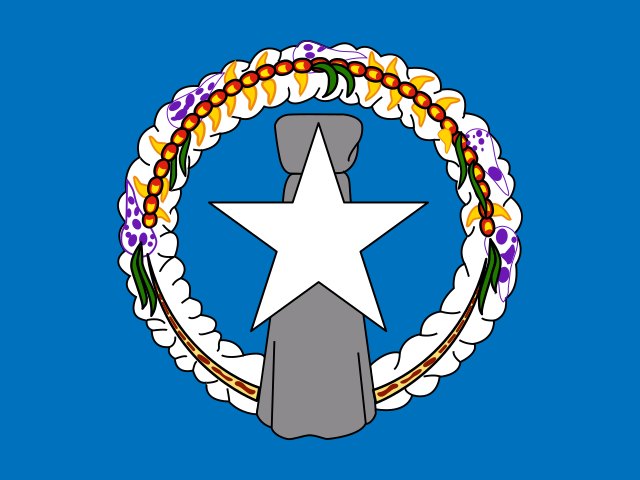
Northern Mariana Islands
Population
Area
GDP
GDP Per Capita
Quick FAQs
Region
Capital
ISO 3166
Government Type
Language
ON THIS PAGE
About Northern Mariana Islands
Northern Mariana Islands is a US commonwealth in political union with the United States, located in Oceania in the North Pacific Ocean, about three-quarters of the way from Hawaii to the Philippines, covering an area of 464 square kilometers. As of 2024, the Northern Mariana Islands has a population of about 51,118, with Chamorro, Carolinian, and English as official languages alongside widely spoken Philippine languages. The southern islands are limestone with fringing coral reefs while the northern islands are volcanic with active volcanoes, with a tropical marine climate moderated by northeast trade winds. Saipan serves as the capital.
The Northern Mariana Islands has a US Pacific island commonwealth economy with a GDP of $1.10 billion, driven by tourism, scrap iron, refined petroleum, scrap copper, hydraulic engines, and integrated circuits. Natural resources include arable land and fish. The territory has been hit hard by the 2018 typhoon and is dependent on energy imports. The island is exempt from some US labor and immigration laws and has a longstanding garment production industry, while growing Chinese and Korean tourist destinations support the economy.
Geography & Environment
Geographic Location
Geographic Coordinate
Geographic Area
Climate
Terrain
Natural Hazards
Natural Resources
Geography Note
People & Society
Ave. Life Expentancy at Birth
Urbanization
Population Growth Rate
Literacy Rate
Health Expendeture
Education Expenditure
Languages
Religions
Government
Country Name
conventional short form: Northern Mariana Islands
former: Trust Territory of the Pacific Islands, Mariana Islands District
abbreviation: CNMI
etymology: Spain named the islands in 1667 in honor of the Spanish Queen, MARIANA of Austria
Economy
Economic Overview
US Pacific island commonwealth economy; growing Chinese and Korean tourist destination; hit hard by 2018 typhoon; dependent on energy imports; exempt from some US labor and immigration laws; longstanding garment production