

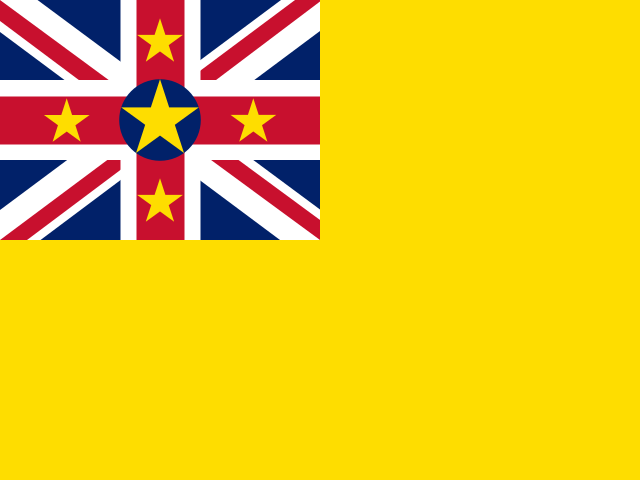
Niue
Population
Area
GDP
GDP Per Capita
Quick FAQs
Region
Capital
ISO 3166
Government Type
Language
ON THIS PAGE
About Niue
Niue is a self-governing territory in free association with New Zealand, located in Oceania in the South Pacific Ocean, east of Tonga, covering an area of 260 square kilometers. As of 2024, Niue has a population of about 1,815, with Niuean and English as official languages. The island features steep limestone cliffs along the coast and a central plateau with a tropical climate modified by southeast trade winds. Alofi serves as the capital, and the government operates as a parliamentary democracy.
Niue has an upper-middle-income economy with a GDP per capita of $11,100, relying on tourism, small-scale agricultural processing, subsistence farming, and postage stamps. Natural resources include arable land and fish. The territory is environmentally fragile and has experienced massive emigration, with its population declining significantly over recent decades. Niue became the world’s first country to achieve Dark Sky certification and is working toward sustainable tourism development.
Geography & Environment
Geographic Location
Geographic Coordinate
Geographic Area
Climate
Terrain
Natural Hazards
Natural Resources
Geography Note
People & Society
Ave. Life Expentancy at Birth
Urbanization
Population Growth Rate
Literacy Rate
Health Expendeture
Education Expenditure
Languages
Religions
Government
Country Name
conventional short form: Niue
former: Savage Island
etymology: the origin of the name is obscure; in Niuean, the word translates as "behold the coconut;" the former name, Savage Island, was the result of an acrimonious meeting in 1774 between English explorer Captain James COOK and local people
Economy
Economic Overview
upper-middle-income self-governing New Zealand territorial economy; environmentally fragile; massive emigration; post-pandemic tourism rebound; postage stamps, small-scale agricultural processing, and subsistence farming; most recent Asian Development Bank member