

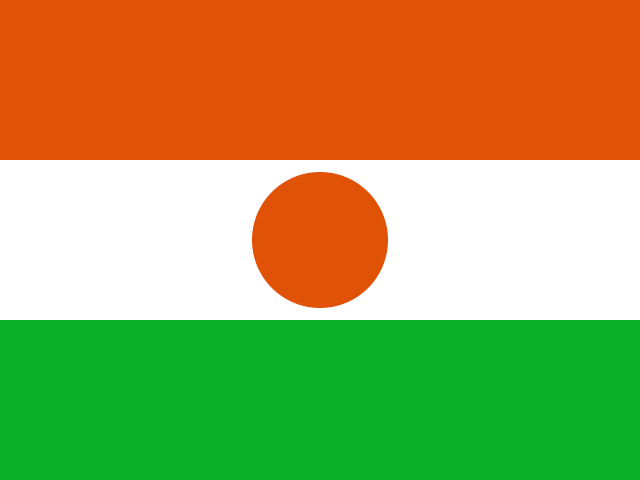
Niger
Population
Area
GDP
GDP Per Capita
Quick FAQs
Region
Capital
ISO 3166
Government Type
Language
ON THIS PAGE
About Niger
Niger is a country located in Western Africa, southeast of Algeria, covering an area of approximately 1.267 million square kilometers. As of 2025, Niger has a population of about 27.32 million, with French as the official language alongside Hausa, Zarma, Fufulde, Tamashek, Kanuri, Gurmancema, and Tagdal. The country is predominately desert plains and sand dunes with flat to rolling plains in the south and hills in the north, featuring a mostly hot, dry, dusty desert climate that becomes tropical in the extreme south. Niamey serves as the capital.
Niger has a low-income Sahel economy with a GDP of $19.54 billion and a GDP per capita of $1,800, driven by uranium mining, petroleum, cement, brick, soap, textiles, food processing, chemicals, and slaughterhouses. Key agricultural products include millet, cowpeas, sorghum, onions, milk, sugarcane, cabbages, cassava, groundnuts, and tomatoes, while natural resources include uranium, coal, iron ore, tin, phosphates, gold, molybdenum, gypsum, salt, and petroleum. The unemployment rate is 0.4% as of 2025, with a life expectancy of 61.4 years and a literacy rate of 35.6%. Major instability and humanitarian crises limit economic activity, though the economy has been rebounding since the December 2020 Nigerian border reopening.
Geography & Environment
Geographic Location
Geographic Coordinate
Geographic Area
Climate
Terrain
Natural Hazards
Natural Resources
Geography Note
People & Society
Ave. Life Expentancy at Birth
Urbanization
Population Growth Rate
Literacy Rate
Health Expendeture
Education Expenditure
Languages
Religions
Government
Country Name
conventional short form: Niger
local long form: République du Niger
local short form: Niger
etymology: named for the Niger River that passes through the southwest of the country; the name of the river probably comes from the local Tuareg name, egereou n-igereouen (big rivers)
Economy
Economic Overview
low-income Sahel economy; major instability and humanitarian crises limit economic activity; COVID-19 eliminated recent antipoverty gains; economy rebounding since December 2020 Nigerian border reopening and new investments; uranium resource rich