

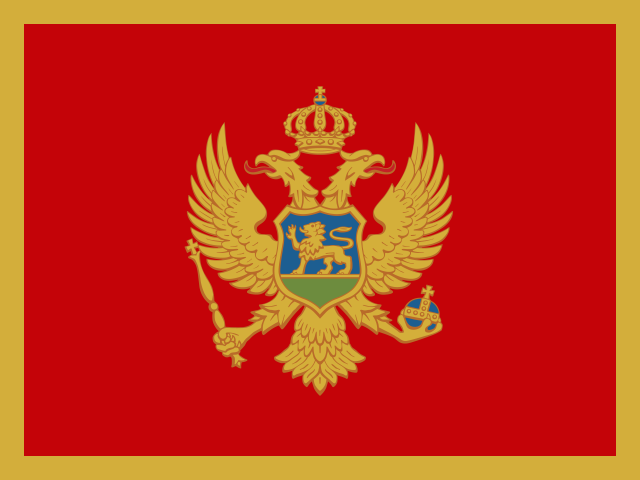
Montenegro
Population
Area
GDP
GDP Per Capita
Quick FAQs
Region
Capital
ISO 3166
Government Type
Language
ON THIS PAGE
About Montenegro
Montenegro is a country located in Southeastern Europe between the Adriatic Sea and Serbia, covering an area of approximately 13,812 square kilometers. As of 2024, Montenegro has a population of about 599,800, with Montenegrin as the official language alongside Serbian, Bosnian, and Albanian. The country features a highly indented coastline with a narrow coastal plain backed by rugged high limestone mountains and plateaus, with a Mediterranean climate of hot, dry summers and relatively cold winters with heavy snowfalls inland. Podgorica serves as the capital, and the government operates as a parliamentary republic.
Montenegro has an upper-middle-income economy with a GDP of $8.07 billion and a GDP per capita of $27,900, driven by steelmaking, aluminum, agricultural processing, consumer goods, and tourism. Key agricultural products include milk, potatoes, watermelons, grapes, and oranges, while natural resources include bauxite and hydroelectricity. The unemployment rate is 13.6% as of 2025, with a literacy rate of 98.5% and life expectancy of 77.9 years. Montenegro uses the euro as its de facto currency and is pursuing EU accession, though it faces challenges including reduced growth due to slowdowns in tourism and industrial production.
Geography & Environment
Geographic Location
Geographic Coordinate
Geographic Area
Climate
Terrain
Natural Hazards
Natural Resources
Geography Note
People & Society
Ave. Life Expentancy at Birth
Urbanization
Population Growth Rate
Literacy Rate
Health Expendeture
Education Expenditure
Languages
Religions
Government
Country Name
conventional long form
conventional short form
local long form
local short form
former
etymology
Economy
Economic Overview
upper-middle-income, small Balkan economy; uses euro as de facto currency; reduced growth due to slowdown in tourism and industrial production; new impetus for EU accession under Europe Now government; energy price cap and declining food and services prices easing inflation rate