

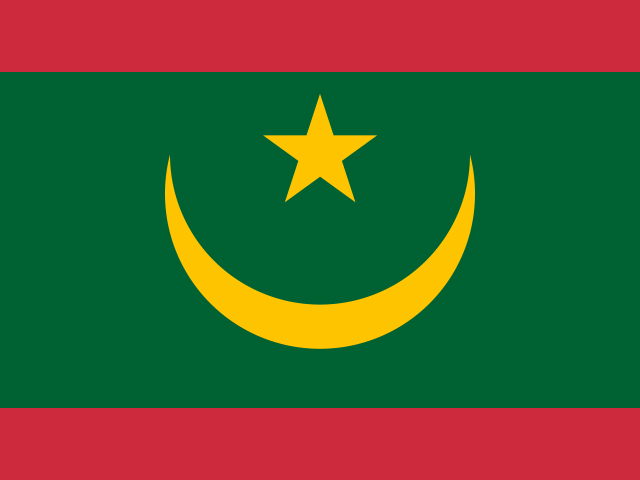
Mauritania
Population
Area
GDP
GDP Per Capita
Quick FAQs
Region
Capital
ISO 3166
Government Type
Language
ON THIS PAGE
About Mauritania
Mauritania is a country located in Western Africa along the North Atlantic Ocean, between Senegal and Western Sahara, covering an area of approximately 1.03 million square kilometers. As of 2025, Mauritania has a population of over 5.2 million, with Arabic as the official and national language alongside Pular, Soninke, Wolof, and French. The country is mostly barren, flat plains of the Sahara with some central hills, experiencing a desert climate that is constantly hot, dry, and dusty. Nouakchott serves as the capital, and the government operates as a presidential republic.
Mauritania has a lower-middle-income economy with a GDP of $10.77 billion and a GDP per capita of $6,400, driven by iron ore, gypsum, copper, phosphate, diamonds, gold, oil, and fish. Key agricultural products include rice, milk, goat milk, sorghum, dates, and livestock, while natural resources include iron ore, gypsum, copper, phosphate, diamonds, gold, oil, and fish. The unemployment rate is 10.3% as of 2025, with a literacy rate of 59.5% and a life expectancy of 68.7 years. Mauritania faces challenges including systemic corruption, terrorism, foreign over-fishing, environmental fragility, and a primarily agrarian economy vulnerable to drought.
Geography & Environment
Geographic Location
Geographic Coordinate
Geographic Area
Climate
Terrain
Natural Hazards
Natural Resources
Geography Note
People & Society
Ave. Life Expentancy at Birth
Urbanization
Population Growth Rate
Literacy Rate
Health Expendeture
Education Expenditure
Languages
Religions
Government
Country Name
conventional short form: Mauritania
local long form: Al Jumhuriyah al Islamiyah al Muritaniyah
local short form: Muritaniyah
etymology: named for the ancient kingdom of Mauretania (3rd century B.C. to 1st century A.D.); its name derives from the Mauri (Moors) of northwest Africa
Economy
Economic Overview
lower middle-income West African economy; primarily agrarian; rising urbanization; poor property rights; systemic corruption; endemic social and workforce tensions; wide-scale terrorism; foreign over-fishing; environmentally fragile