

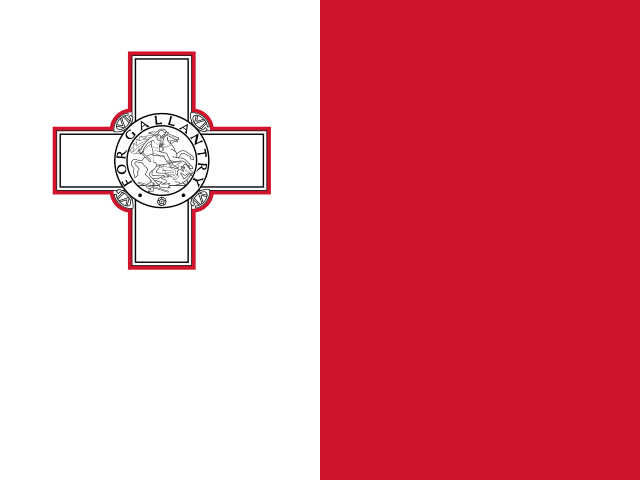
Malta
Population
Area
GDP
GDP Per Capita
Quick FAQs
Region
Capital
ISO 3166
Government Type
Language
ON THIS PAGE
About Malta
Malta is an island country located in Southern Europe, in the Mediterranean Sea south of Sicily, Italy, covering an area of approximately 316 square kilometers. As of 2025, Malta has a population of about 521,800, with Maltese and English as official languages. The country features mostly low, rocky, flat to dissected plains with many coastal cliffs, experiencing a Mediterranean climate of mild, rainy winters and hot, dry summers. Valletta serves as the capital, and the government operates as a parliamentary republic.
Malta has a high-income economy with a GDP of $24.32 billion and a GDP per capita of $60,500, driven by tourism, electronics, ship building and repair, construction, food and beverages, pharmaceuticals, footwear, clothing, tobacco, aviation services, financial services, and information technology. Key agricultural products include milk, tomatoes, onions, potatoes, and chicken, while natural resources include limestone, salt, and arable land. The unemployment rate is just 2.9% as of 2025, and Malta enjoys a life expectancy of 83 years. As a member of the European Union using the euro, Malta has a diversified economy with strong tourism, trade, and manufacturing sectors.
Geography & Environment
Geographic Location
Geographic Coordinate
Geographic Area
Climate
Terrain
Natural Hazards
Natural Resources
Geography Note
People & Society
Ave. Life Expentancy at Birth
Urbanization
Population Growth Rate
Literacy Rate
Health Expendeture
Education Expenditure
Languages
Religions
Government
Country Name
conventional short form: Malta
local long form: Repubblika ta' Malta
local short form: Malta
etymology: the origin is unclear; the name may come from the ancient term mel, meaning "high" and probably referring to the island's rocks; the ancient Greeks called the island "Melite," possibly from the Greek word meli, meaning "honey" and referring to the island's honey production
Economy
Economic Overview
high-income, EU-member European economy; diversified portfolio; euro user; dependent on food and energy imports; strong tourism, trade, and manufacturing sectors; high North African immigration; large welfare system; educated workforce