

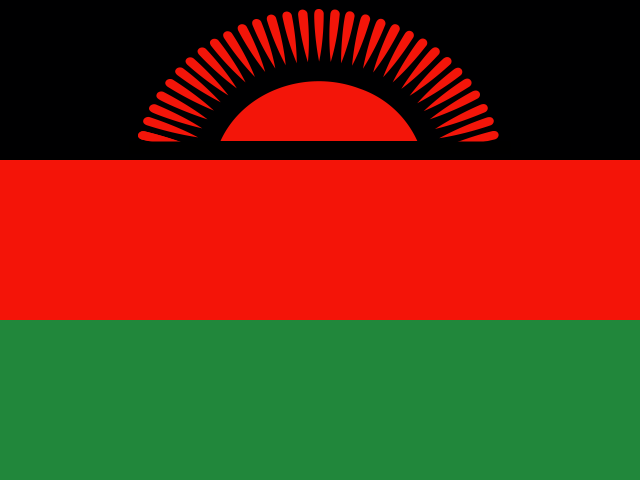
Malawi
Population
Area
GDP
GDP Per Capita
Quick FAQs
Region
Capital
ISO 3166
Government Type
Language
ON THIS PAGE
About Malawi
Malawi is a landlocked country located in Southern Africa, east of Zambia, west and north of Mozambique, covering an area of approximately 118,484 square kilometers. As of 2025, Malawi has a population of over 21.5 million, with English as the official language and Chichewa as the national language alongside other regional languages. The country features a narrow elongated plateau with rolling plains, rounded hills, and some mountains, experiencing a sub-tropical climate with a rainy season from November to May and a dry season from May to November. Lilongwe serves as the capital, and the government operates as a presidential republic.
Malawi has a low-income economy with a GDP of $11.26 billion and a GDP per capita of $1,600, driven by tobacco, tea, sugar, sawmill products, cement, and consumer goods. Key agricultural products include cassava, sugarcane, maize, potatoes, and tobacco, while natural resources include limestone, arable land, hydropower, uranium, coal, and bauxite. The unemployment rate is 4.9% as of 2024, though the country faces severe poverty and economic challenges. Malawi is one of the world’s least developed countries, with an economy heavily dependent on rain-fed agriculture and vulnerable to climatic shocks, though it has potential for growth in mining and energy sectors.
Geography & Environment
Geographic Location
Geographic Coordinate
Geographic Area
Climate
Terrain
Natural Hazards
Natural Resources
Geography Note
People & Society
Ave. Life Expentancy at Birth
Urbanization
Population Growth Rate
Literacy Rate
Health Expendeture
Education Expenditure
Languages
Religions
Government
Country Name
conventional long form
conventional short form
local long form
local short form
former
etymology
Economy
Economic Overview
low-income East African economy; primarily agrarian; investing in human capital; urban poverty increasing due to COVID-19; high public debt; endemic corruption and poor property rights; poor hydroelectric grid; localized pharmaceutical industry