

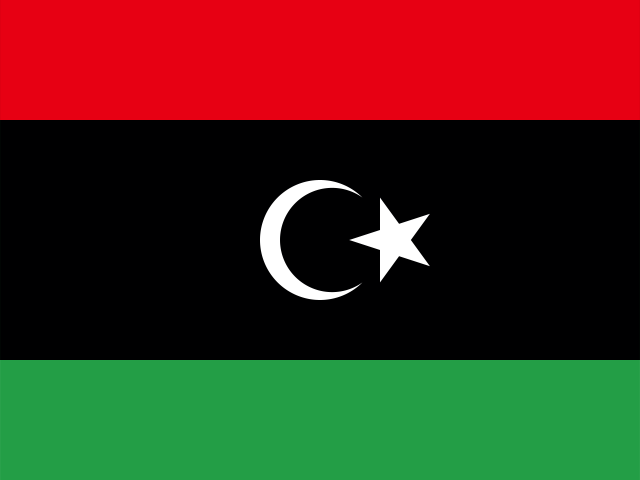
Libya
Population
Area
GDP
GDP Per Capita
Quick FAQs
Region
Capital
ISO 3166
Government Type
Language
ON THIS PAGE
About Libya
Libya is a country located in Northern Africa along the Mediterranean Sea, between Egypt, Tunisia, and Algeria, covering an area of approximately 1.76 million square kilometers. As of 2024, Libya has a population of over 7.36 million, with Arabic as the official language alongside Italian and English widely understood in major cities. The country is mostly barren, flat to undulating plains, plateaus, and depressions, with a Mediterranean climate along the coast and a dry, extreme desert interior. Tripoli serves as the capital, and the government remains in transition.
Libya has an upper-middle-income, fossil fuel-based economy with a GDP of $46.64 billion and a GDP per capita of $12,300, overwhelmingly dependent on petroleum, petrochemicals, aluminum, iron and steel, food processing, textiles, and cement. Key agricultural products include potatoes, onions, watermelons, tomatoes, dates, and olives, while natural resources include petroleum, natural gas, and gypsum. The unemployment rate is 18.8% as of 2025. Libya faces severe economic challenges following the 2020 oil blockade and political instability, with reduced government spending, currency devaluation, and public wages accounting for over 60% of expenditures.
Geography & Environment
Geographic Location
Geographic Coordinate
Geographic Area
Climate
Terrain
Natural Hazards
Natural Resources
Geography Note
People & Society
Ave. Life Expentancy at Birth
Urbanization
Population Growth Rate
Literacy Rate
Health Expendeture
Education Expenditure
Languages
Religions
Government
Country Name
conventional short form: Libya
local long form: Dawlat Libiya
local short form: Libiya
etymology: the name probably derives from the Libu, a North African tribe first mentioned in texts from the 13th century B.C.; the ancient Greeks and Romans used the name for the entire North African coast west of Egypt
Economy
Economic Overview
upper middle-income, fossil fuel-based North African economy; 31% economic contraction due to COVID-19 and 2020 oil blockade; reduced government spending; central bank had to devalue currency; public wages are over 60% of expenditures