

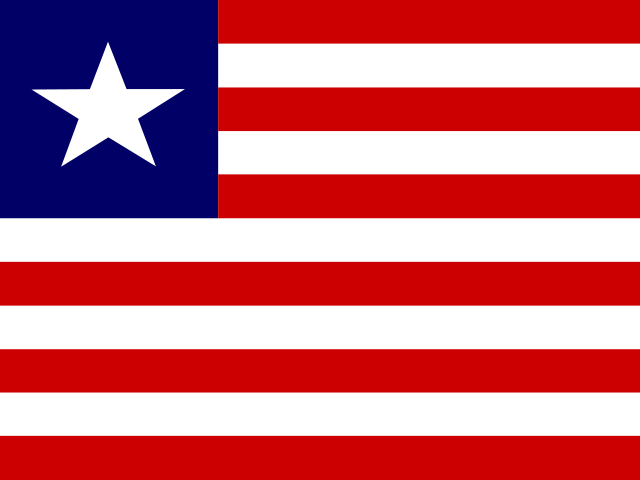
Liberia
Population
Area
GDP
GDP Per Capita
Quick FAQs
Region
Capital
ISO 3166
Government Type
Language
ON THIS PAGE
About Liberia
Liberia is a country located in Western Africa along the North Atlantic Ocean, between Cote d’Ivoire and Sierra Leone, covering an area of approximately 111,369 square kilometers. As of 2025, Liberia has a population of over 5.56 million, with English as the official language alongside 27 indigenous languages. The country features mostly flat to rolling coastal plains rising to a rolling plateau and low mountains in the northeast, with a tropical climate that is hot and humid with dry winters and wet, cloudy summers. Monrovia serves as the capital, and the government operates as a presidential republic.
Liberia has a low-income economy with a GDP of $4.75 billion and a GDP per capita of $1,700, driven by mining of iron ore and gold, rubber processing, palm oil processing, and diamonds. Key agricultural products include cassava, oil palm fruit, rice, rubber, and sugarcane, while natural resources include iron ore, timber, diamonds, gold, and hydropower. The unemployment rate is 2.1% as of 2024, though the country faces widespread poverty, food scarcity, and high inflation. Liberia continues to recover from civil wars and the Ebola crisis, with significant challenges including growing government debt and a large informal economy.
Geography & Environment
Geographic Location
Geographic Coordinate
Geographic Area
Climate
Terrain
Natural Hazards
Natural Resources
Geography Note
People & Society
Ave. Life Expentancy at Birth
Urbanization
Population Growth Rate
Literacy Rate
Health Expendeture
Education Expenditure
Languages
Religions
Government
Country Name
conventional short form: Liberia
etymology: name derives from the Latin word liber, meaning "free;" so named because the nation was created as a homeland for liberated African-American slaves
Economy
Economic Overview
low-income West African economy; food scarcity, especially in rural areas; high poverty and inflation; bad recession prior to COVID-19 due to Ebola crisis; growing government debt; longest continuously operated rubber plantation; large informal economy