

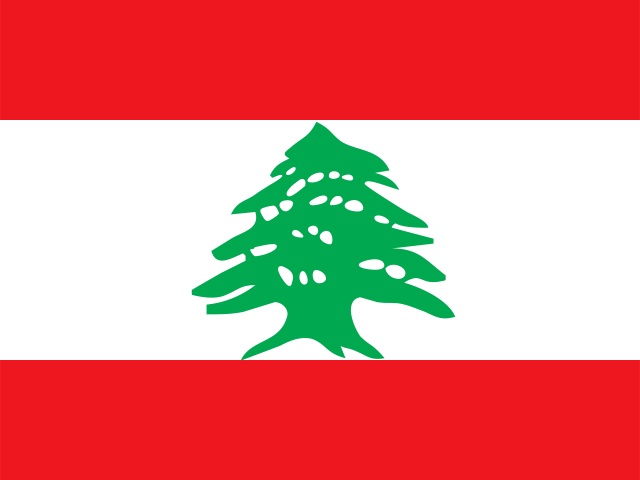
Lebanon
Population
Area
GDP
GDP Per Capita
Quick FAQs
Region
Capital
ISO 3166
Government Type
Language
ON THIS PAGE
About Lebanon
Lebanon is a country located in the Middle East along the Mediterranean Sea, between Israel and Syria, covering an area of approximately 10,400 square kilometers. As of 2024, Lebanon has a population of over 5.36 million, with Arabic as the official language alongside French, English, and Armenian. The country features a narrow coastal plain, the Bekaa Valley, and the Lebanon and Anti-Lebanon Mountains, with a Mediterranean climate of mild to cool, wet winters and hot, dry summers. Beirut serves as the capital, and the government operates as a parliamentary democratic republic.
Lebanon has a lower-middle-income economy with a GDP of $20.08 billion and a GDP per capita of $11,300, driven by banking, tourism, real estate and construction, food processing, wine, jewelry, cement, textiles, and oil refining. Key agricultural products include potatoes, milk, tomatoes, apples, oranges, and olives, while natural resources include limestone, iron ore, salt, and arable land. The unemployment rate is 11.6% as of 2023, with a literacy rate of 92% and life expectancy of 77.9 years. Lebanon faces severe economic challenges including hyperinflation, sharp increases in poverty, banks ceasing lending, and economic contraction resulting from the Israel-Hezbollah conflict and destroyed infrastructure.
Geography & Environment
Geographic Location
Geographic Coordinate
Geographic Area
Climate
Terrain
Natural Hazards
Natural Resources
Geography Note
People & Society
Ave. Life Expentancy at Birth
Urbanization
Population Growth Rate
Literacy Rate
Health Expendeture
Education Expenditure
Languages
Religions
Government
Country Name
conventional long form
conventional short form
local long form
local short form
former
etymology
Economy
Economic Overview
lower middle-income Middle Eastern economy; hyperinflation and sharp poverty increases; banks have ceased lending; economic contraction, destroyed infrastructure, and reduced consumer demand resulting from Israel-Hezbollah conflict