

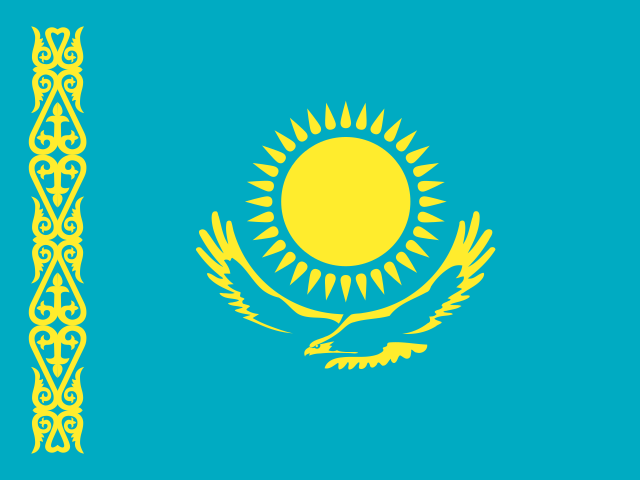
Kazakhstan
Population
Area
GDP
GDP Per Capita
Quick FAQs
Region
Capital
ISO 3166
Government Type
Language
ON THIS PAGE
About Kazakhstan
Kazakhstan is a country located in Central Asia, northwest of China, with a small portion west of the Ural River in easternmost Europe, covering an area of approximately 2.72 million square kilometers, making it the largest landlocked country in the world. As of 2025, Kazakhstan has a population of over 20.4 million, with Kazakh and Russian as the dominant languages. The country features vast flat steppe extending from the Volga to the Altai Mountains, with a continental climate of cold winters and hot summers. Astana serves as the capital, and the government operates as a presidential republic.
Kazakhstan has an upper-middle-income economy with a GDP of $288.41 billion and a GDP per capita of $35,900, driven by oil, coal, iron ore, manganese, chromite, lead, zinc, copper, titanium, gold, silver, and uranium extraction. Key agricultural products include wheat, milk, barley, potatoes, and watermelons, while the country holds major deposits of petroleum, natural gas, coal, iron ore, and uranium. The unemployment rate is 4.8% as of 2025, with a poverty rate of just 5.2%. Kazakhstan continues to experience robust growth driven by rising oil production, manufacturing expansion, and infrastructure investments, though rapid growth has contributed to high inflation rates.
Geography & Environment
Geographic Location
Geographic Coordinate
Geographic Area
Climate
Terrain
Natural Hazards
Natural Resources
Geography Note
People & Society
Ave. Life Expentancy at Birth
Urbanization
Population Growth Rate
Literacy Rate
Health Expendeture
Education Expenditure
Languages
Religions
Government
Country Name
conventional long form
conventional short form
local long form
local short form
former
etymology
Economy
Economic Overview
upper-middle-income Central Asian economy; robust growth due to rising oil production, expansion in manufacturing and services, rising domestic demand, and infrastructure investments; however, rapid growth contributing to high inflation rate; declining unemployment and poverty rates