

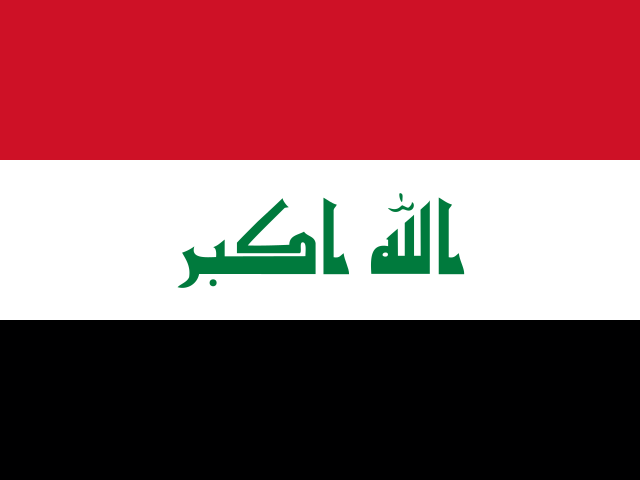
Iraq
Population
Area
GDP
GDP Per Capita
Quick FAQs
Region
Capital
ISO 3166
Government Type
Language
ON THIS PAGE
About Iraq
Iraq is a country located in the Middle East, bordering the Persian Gulf between Iran and Kuwait, covering an area of approximately 438,317 square kilometers. As of 2025, Iraq has a population of over 42.9 million, with Arabic and Kurdish as official languages, alongside Turkmen and Syriac recognized in areas where these languages are spoken. The country features mostly broad plains with reedy marshes along the Iranian border and mountains along the borders with Iran and Turkey, experiencing a mostly desert climate with mild to cool winters and dry, hot summers. Baghdad serves as the capital, and the government operates as a federal parliamentary republic.
Iraq has a highly oil-dependent economy with a GDP of $279.64 billion and a GDP per capita of $12,700, with petroleum as the dominant industry alongside chemicals, textiles, leather, construction materials, food processing, and fertilizer. Key agricultural products include wheat, dates, maize, tomatoes, and grapes, while natural resources include petroleum, natural gas, phosphates, and sulfur. The unemployment rate is 15.5% as of 2025, with a literacy rate of 84.1% and life expectancy of 72.4 years. Iraq continues to recover from decades of conflict, facing persistent challenges including corruption, informal markets, political fragility, and economic vulnerability to fluctuations in global oil prices.
Geography & Environment
Geographic Location
Geographic Coordinate
Geographic Area
Climate
Terrain
Natural Hazards
Natural Resources
Geography Note
People & Society
Ave. Life Expentancy at Birth
Urbanization
Population Growth Rate
Literacy Rate
Health Expendeture
Education Expenditure
Languages
Religions
Government
Country Name
conventional long form
conventional short form
local long form
local short form
former
etymology
Economy
Economic Overview
highly oil-dependent Middle Eastern economy; fiscal sustainability subject to fluctuation in oil prices; rising public confidence in economic conditions; import-dependent for most sectors; persistent challenges of corruption, informal markets, banking access, and political fragility