

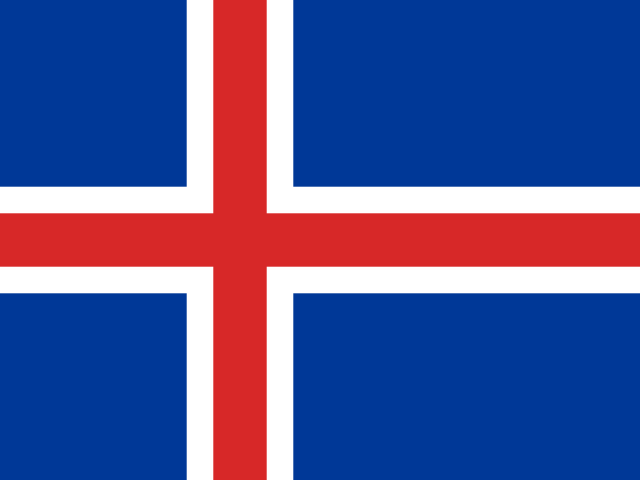
Iceland
Population
Area
GDP
GDP Per Capita
Quick FAQs
Region
Capital
ISO 3166
Government Type
Language
ON THIS PAGE
About Iceland
Iceland is an island country located in Northern Europe between the Greenland Sea and the North Atlantic Ocean, northwest of the United Kingdom, covering an area of approximately 103,000 square kilometers. As of 2024, Iceland has a population of about 364,000, with Icelandic as the primary language alongside English, Polish, and other Nordic languages. The country features a mostly plateau landscape interspersed with mountain peaks and icefields, with a deeply indented coastline of bays and fiords, experiencing a temperate climate moderated by the North Atlantic Current. Reykjavik serves as the capital, and the government operates as a unitary parliamentary republic.
Iceland has a high-income economy with a GDP of $33.46 billion and a GDP per capita of $65,600, driven by tourism, fish processing, aluminum smelting, geothermal power, hydropower, and medical products. Key natural resources include fish, hydropower, and geothermal power, while agricultural products include milk, chicken, lamb, and barley. The unemployment rate is 3.6% as of 2025, and Icelanders enjoy a life expectancy of 82.8 years with a poverty rate of only 8.8%. As a member of the European Economic Area but not the EU, Iceland continues to balance its thriving tourism and fishing industries with sustainability and economic diversification.
Geography & Environment
Geographic Location
Geographic Coordinate
Geographic Area
Climate
Terrain
Natural Hazards
Natural Resources
Geography Note
People & Society
Ave. Life Expentancy at Birth
Urbanization
Population Growth Rate
Literacy Rate
Health Expendeture
Education Expenditure
Languages
Religions
Government
Country Name
conventional short form: Iceland
local long form: none
local short form: Island
etymology: Floki VILGERDARSON, an early Norse explorer of the island in the 10th century, applied the name "Land of Ice," from the local words ís (ice) and land (land)
Economy
Economic Overview
high-income North Atlantic island economy; not an EU member but market integration via European Economic Area (EEA); dominant tourism, fishing, and aluminum industries vulnerable to demand swings and disruption from volcanic activity; inflation remains above target rate; barriers to foreign business access and economic diversification