

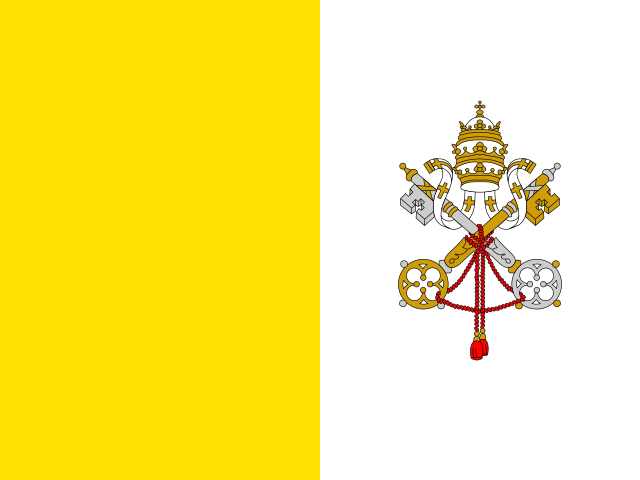
Holy See
Population
Area
GDP
GDP Per Capita
Quick FAQs
Region
Capital
ISO 3166
Government Type
Language
ON THIS PAGE
About Holy See
Holy See (Vatican City) is the smallest sovereign state in the world, located as an enclave within Rome, Italy, covering a land area of just 0.44 square kilometers. As of 2024, Vatican City has a population of approximately 1,000 residents, with Italian, Latin, and French among the languages used. The territory features an urban landscape on a low hill, with a temperate climate of mild, rainy winters and hot, dry summers. Vatican City serves as both the capital and the seat of the Roman Catholic Church, governed as an ecclesiastical elective monarchy under the Pope.
Holy See (Vatican City) has no natural resources and derives its income from investments, real estate, donations from Catholics worldwide, and the sale of postage stamps, souvenirs, and publications. The city-state is home to some of the world’s most famous artistic and architectural treasures, including St. Peter’s Basilica, the Sistine Chapel, and the Vatican Museums. As the spiritual and administrative center of the Roman Catholic Church, which has over one billion adherents globally, the Holy See plays a significant diplomatic role in international affairs, maintaining formal relations with numerous countries and holding permanent observer status at the United Nations.
Geography & Environment
Geographic Location
Geographic Coordinate
Geographic Area
Climate
Terrain
Natural Hazards
Natural Resources
Geography Note
People & Society
Ave. Life Expentancy at Birth
Urbanization
Population Growth Rate
Literacy Rate
Health Expendeture
Education Expenditure
Languages
Religions
Government
Country Name
conventional short form: Holy See (Vatican City)
local long form: La Santa Sede (Stato della Citta del Vaticano)
local short form: Santa Sede (Citta del Vaticano)
etymology: "holy" comes from the Greek word hera, meaning "sacred"; "see" comes from the Latin word sedes, meaning "seat," and refers to the episcopal chair; the name Vatican derives from the hill Mons Vaticanus on which the Vatican is located and which comes from the Latin vates (prophet), referring to the fortune tellers and soothsayers who frequented the area in Roman times