

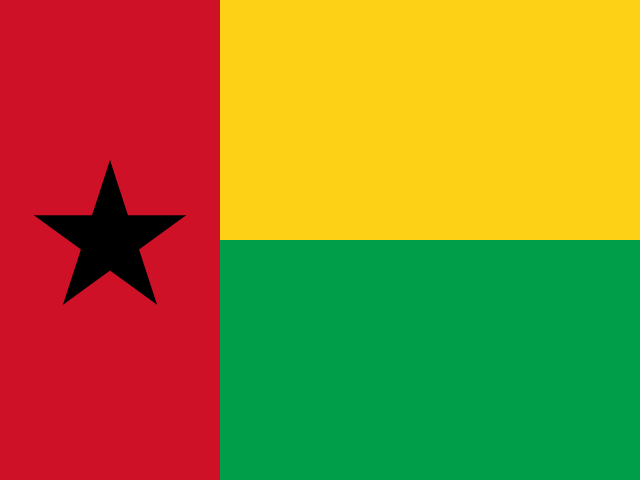
Guinea-Bissau
Population
Area
GDP
GDP Per Capita
Quick FAQs
Region
Capital
ISO 3166
Government Type
Language
ON THIS PAGE
About Guinea-Bissau
Guinea-Bissau is a country located in Western Africa along the North Atlantic Ocean, between Guinea and Senegal, covering an area of approximately 36,125 square kilometers. As of 2024, Guinea-Bissau has a population of over 2.1 million, with Portuguese-based Creole and Portuguese as the main languages alongside Pular and Mandingo. The country features a mostly low-lying coastal plain with a deeply indented estuarine coastline rising to savanna in the east, with numerous offshore islands including the Arquipelago Dos Bijagos, and a tropical climate with a monsoonal rainy season. Bissau serves as the capital, and the government operates as a semi-presidential republic.
Guinea-Bissau is one of the poorest countries in West Africa, with a GDP of $2.12 billion and a GDP per capita of $2,700, driven primarily by agricultural products processing, beer, and soft drinks. The country is a major exporter of cashews, with key agricultural products also including rice, groundnuts, and oil palm fruit. Natural resources include fish, timber, phosphates, bauxite, and unexploited petroleum deposits. The unemployment rate is 2.7%, but 50.5% of the population lives below the poverty line. Guinea-Bissau faces significant challenges including political instability, systemic corruption, banking sector weaknesses, and vulnerability to food supply disruptions and oil price shocks.
Geography & Environment
Geographic Location
Geographic Coordinate
Geographic Area
Climate
Terrain
Natural Hazards
Natural Resources
Geography Note
People & Society
Ave. Life Expentancy at Birth
Urbanization
Population Growth Rate
Literacy Rate
Health Expendeture
Education Expenditure
Languages
Religions
Government
Country Name
conventional long form
conventional short form
local long form
local short form
former
etymology
Economy
Economic Overview
extremely poor West African economy; ethnically diverse labor force; increasing government expenditures; slight inflation due to food supply disruptions; major cashew exporter; systemic banking instabilities and corruption; vulnerable to oil price shocks