

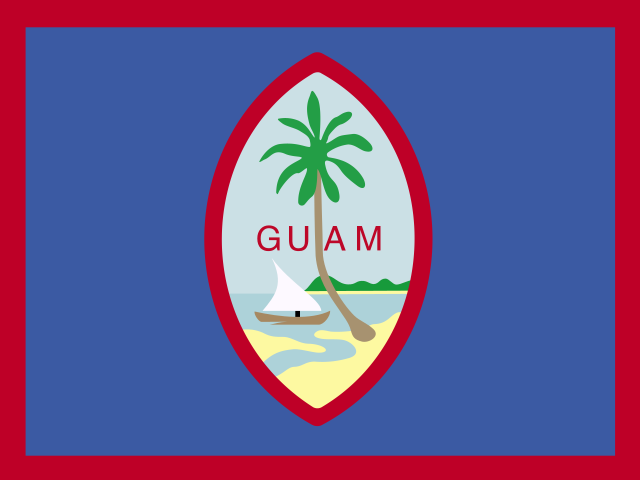
Guam
Population
Area
GDP
GDP Per Capita
Quick FAQs
Region
Capital
ISO 3166
Government Type
Language
ON THIS PAGE
About Guam
Guam is an unincorporated organized territory of the United States located in the western Pacific Ocean, about three-quarters of the way from Hawaii to the Philippines, covering an area of approximately 544 square kilometers. As of 2024, Guam has a population of over 169,500, with English, Filipino, and Chamorro as the most widely spoken languages. The island is volcanic in origin, surrounded by coral reefs, featuring a relatively flat coralline limestone plateau in the north, low hills in the center, and mountains in the south, with a tropical marine climate moderated by northeast trade winds. Hagatna serves as the capital, and the territory operates under a republican form of local self-government.
Guam has an upper-income economy with a GDP of $6.91 billion and a GDP per capita of $35,600, driven primarily by tourism and the presence of multiple US military bases. The economy was significantly impacted by COVID-19 disruptions but has since recovered through vaccination tourism initiatives. Key industries include aquatic wildlife tourism and fishing, though fishing remains largely undeveloped. Guam serves as a strategic American military outpost in the Pacific and a popular destination for Asian tourists, particularly from Japan and South Korea. The territory continues to develop its infrastructure and tourism sector while maintaining its unique Chamorro cultural heritage.
Geography & Environment
Geographic Location
Geographic Coordinate
Geographic Area
Climate
Terrain
Natural Hazards
Natural Resources
Geography Note
People & Society
Ave. Life Expentancy at Birth
Urbanization
Population Growth Rate
Literacy Rate
Health Expendeture
Education Expenditure
Languages
Religions
Government
Country Name
conventional long form
conventional short form
local long form
local short form
abbreviation
etymology
Economy
Economic Overview
small Pacific island US territorial economy; upper income, tourism-based economy; hard-hit by COVID-19 disruptions; relaunched many industries via vaccination tourism; domestic economy relies on multiple military bases; environmentally fragile economy