

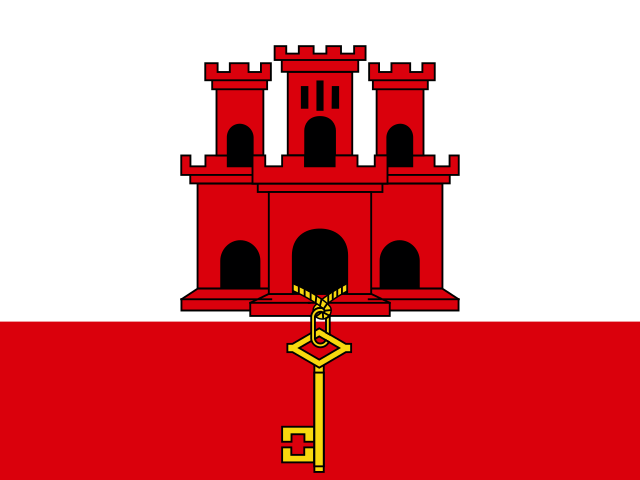
Gibraltar
Population
Area
GDP
GDP Per Capita
Quick FAQs
Region
Capital
ISO 3166
Government Type
Language
ON THIS PAGE
About Gibraltar
Gibraltar is a British Overseas Territory located in Southwestern Europe, bordering the Strait of Gibraltar on the southern coast of Spain, covering an area of just 7 square kilometers. As of 2025, Gibraltar has a population of approximately 29,700, with English used in schools and for official purposes, alongside Spanish, Italian, and Portuguese. The territory features a narrow coastal lowland bordering the iconic Rock of Gibraltar, with a Mediterranean climate of mild winters and warm summers. Gibraltar serves as both the capital and the main city, operating as a self-governing overseas territory of the United Kingdom with a parliamentary democracy.
Gibraltar has a high-income economy driven primarily by financial services, shipping, maritime trade, and tourism, with a GDP of $2.04 billion. The territory has established itself as a key financial center and port of call in the Mediterranean, though it experienced significant economic disruption from Brexit. Gibraltar maintains its own currency, the Gibraltar pound, which is pegged to the British pound sterling. The territory has limited natural resources but leverages its strategic location at the entrance to the Mediterranean Sea. Ongoing negotiations to rejoin the EU Schengen Area continue to shape Gibraltar’s post-Brexit economic future.
Geography & Environment
Geographic Location
Geographic Coordinate
Geographic Area
Climate
Terrain
Natural Hazards
Natural Resources
Geography Note
People & Society
Ave. Life Expentancy at Birth
Urbanization
Population Growth Rate
Literacy Rate
Health Expendeture
Education Expenditure
Languages
Religions
Government
Country Name
conventional short form: Gibraltar
etymology: from the Spanish derivation of the Arabic jabal tariq, which means "Mountain of Tariq" and refers to the Berber chief who captured the peninsula in A.D. 711
Economy
Economic Overview
British territorial high-income economy; Brexit caused significant economic disruption to longstanding financial services, shipping, and tourism industries; ongoing negotiations to rejoin EU Schengen Area; independent taxation authority