

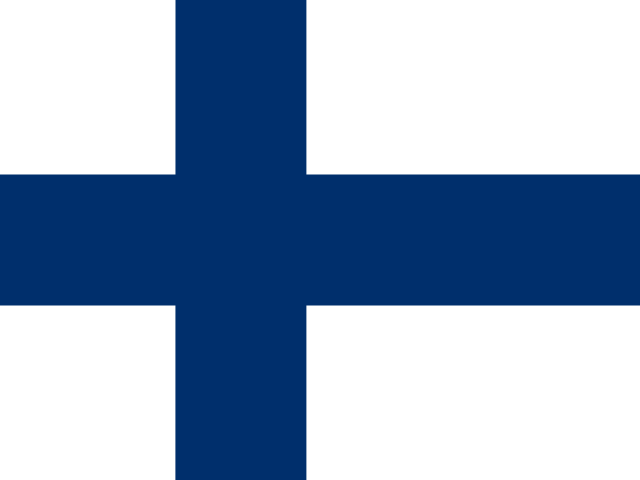
Finland
Population
Area
GDP
GDP Per Capita
Quick FAQs
Region
Capital
ISO 3166
Government Type
Language
ON THIS PAGE
About Finland
Finland is a Nordic country located in Northern Europe, bordered by Sweden, Norway, Russia, and the Baltic Sea, covering an area of approximately 338,424 square kilometers. As of 2025, Finland has a population of over 5.5 million, with Finnish and Swedish as official languages. The country features thousands of lakes, extensive forests, and a fragmented archipelago, experiencing a temperate climate with cold winters and mild summers. Helsinki serves as the capital.
Finland is consistently ranked among the happiest countries in the world, with a highly developed welfare state, excellent education system, and strong economy. Key industries include technology, telecommunications, forestry, machinery, and clean technology. Finland is home to global companies like Nokia and has a thriving startup ecosystem, particularly in gaming and technology. The country joined NATO in 2023, enhancing its security posture. Finns enjoy universal healthcare, free education through university, and a high standard of living.
Geography & Environment
Geographic Location
Geographic Coordinate
Geographic Area
Climate
Terrain
Natural Hazards
Natural Resources
Geography Note
People & Society
Ave. Life Expentancy at Birth
Urbanization
Population Growth Rate
Literacy Rate
Health Expendeture
Education Expenditure
Languages
Religions
Government
Country Name
conventional short form: Finland
local long form: Suomen tasavalta (Finnish)/ Republiken Finland (Swedish)
local short form: Suomi (Finnish)/ Finland (Swedish)
etymology: name derives from the Finns, an ethnic group in northeastern Europe; their name comes from the Germanic word finna, meaning "fish scale;" the local name, Suomi, may come from two local words: suo, meaning "marsh," and maa, meaning "land"
Economy
Economic Overview
high-income, export-based EU and eurozone economy; major timber, metals, engineering, telecom, and electronics industries; emerging from recession triggered by inflation, weak consumer and export demand, and lower private investment; labor market reform plan to address structural rigidities