

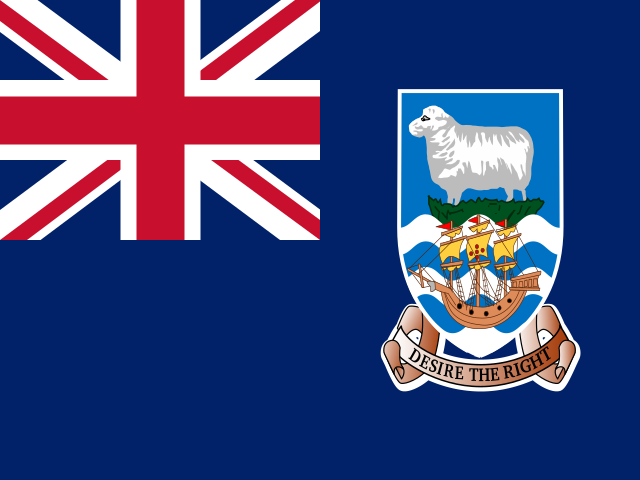
Falkland Islands
Population
Area
GDP
GDP Per Capita
Quick FAQs
Region
Capital
ISO 3166
Government Type
Language
ON THIS PAGE
About Falkland Islands
Falkland Islands is a British Overseas Territory located in the South Atlantic Ocean, approximately 500 kilometers east of Argentina, covering an area of approximately 12,173 square kilometers. The territory consists of two main islands, East Falkland and West Falkland, along with hundreds of smaller islands. English serves as the official language, and Stanley serves as the capital and main settlement.
The Falkland Islands economy is based on fishing, sheep farming, and increasingly tourism, with the territory also exploring oil and gas potential in surrounding waters. The islands gained international attention during the 1982 Falklands War between the UK and Argentina. The population enjoys a high standard of living with developed infrastructure and services. The Falklands continue to be a subject of sovereignty dispute between the United Kingdom and Argentina, though the islanders have consistently voted to remain a British Overseas Territory.
Geography & Environment
Geographic Location
Geographic Coordinate
Geographic Area
Climate
Terrain
Natural Hazards
Natural Resources
Geography Note
People & Society
Ave. Life Expentancy at Birth
Urbanization
Population Growth Rate
Literacy Rate
Health Expendeture
Education Expenditure
Languages
Religions
Government
Country Name
conventional short form: Falkland Islands (Islas Malvinas)
etymology: the archipelago takes its name from the Falkland Sound, the strait separating the two main islands; the channel was named after the Fifth Viscount of FALKLAND, who sponsored an expedition to the islands in 1690; the Spanish name for the archipelago derives from the French "Iles Malouines," meaning Islands of Malo, the name French explorer Louis-Antoine de BOUGAINVILLE gave the islands in 1764 in honor of the French port of Saint-Malo
Economy
Economic Overview
British South American territorial economy; longstanding fishing industry; surging tourism prior to COVID-19 and Brexit; recent offshore hydrocarbon discoveries threaten ecotourism industries; no central bank and must have British approval on currency shifts