
Antarctica
Population
Area
GDP
GDP Per Capita
Quick FAQs
ON THIS PAGE
About Antarctica
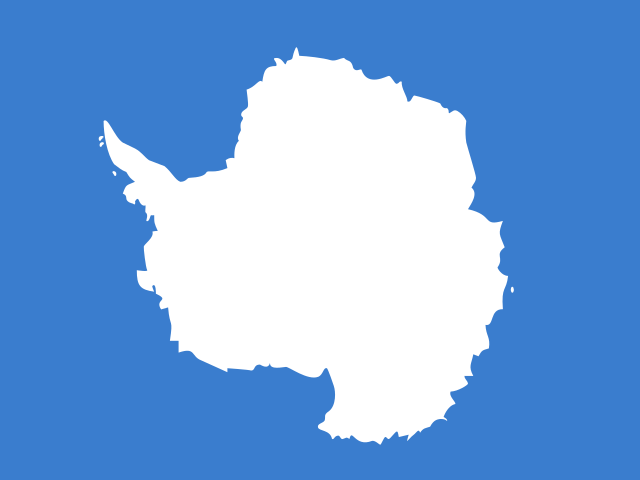
Antarctica is the southernmost continent on Earth, covering approximately 14.2 million square kilometers, almost entirely covered by a thick continental ice sheet. It is the coldest, windiest, and driest continent, with severe low temperatures varying by latitude and elevation. The continent has no permanent inhabitants, but hosts scientific research stations operated by 30 countries, with populations varying from approximately 5,000 in summer to 1,100 in winter. The name Antarctica derives from Greek words meaning opposite to the Arctic.
Antarctica is governed by the 1959 Antarctic Treaty, signed by 56 countries, which designates the continent for peaceful scientific research and prohibits mineral exploitation except for scientific purposes. The continent contains valuable mineral resources including iron ore, chromium, copper, gold, and coal, though commercial extraction remains banned under the Environmental Protocol. Commercial fisheries target krill, icefish, toothfish, and crab under management by the Commission for the Conservation of Antarctic Marine Living Resources. By 2025, Antarctica continues to play a critical role in climate research and global scientific collaboration.
Geography & Environment
Geographic Location
Geographic Coordinate
Geographic Area
Climate
Terrain
Natural Hazards
Natural Resources
Geography Note
People & Society
Ave. Life Expentancy at Birth
Urbanization
Population Growth Rate
Literacy Rate
Health Expendeture
Education Expenditure
Languages
Religions
Government
Country Name
conventional short form: Antarctica
etymology: name derived from two Greek words, anti and arktikos, meaning "opposite to the Arctic" or "opposite to the north"