

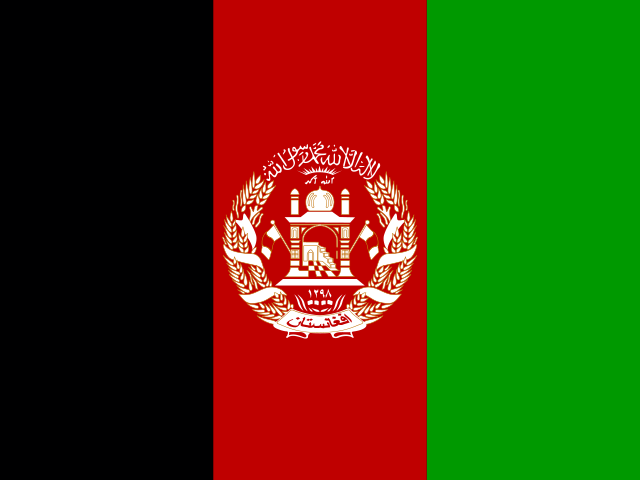
Afghanistan
Population
Area
GDP
GDP Per Capita
Quick FAQs
Region
Capital
ISO 3166
Government Type
Language
ON THIS PAGE
About Afghanistan
Afghanistan is a landlocked country located in South Asia, covering an area of approximately 652,230 square kilometers. As of 2025, Afghanistan has a population of over 49 million, characterized by diverse demographics including Pashtuns, Tajiks, Hazaras, and Uzbeks. The country’s rugged terrain is dominated by the Hindu Kush mountains, with fertile valleys that have historically supported agricultural communities. Dari and Pashto serve as the official languages, while Kabul stands as the capital and largest city. For those seeking detailed statistics and geographic context, a comprehensive map of Afghanistan provides valuable insights into its strategic location bordering Pakistan, Iran, Turkmenistan, Uzbekistan, Tajikistan, and China.
Afghanistan’s economy remains primarily agricultural, with wheat, grapes, and melons among its key crops, though the country also holds significant natural gas, copper, and coal reserves. With a GDP of approximately $17.15 billion and a GDP per capita of $2,000, Afghanistan faces substantial economic challenges including a 54.5% poverty rate and 13.4% unemployment, compounded by ongoing sanctions and frozen reserve assets following the Taliban takeover. The population, with a median age that reflects one of the youngest demographics in Asia, continues to face obstacles in human development, literacy, and healthcare access. By 2025, Afghanistan’s development trajectory remains fragile, making it an essential country for analysis in discussions of geopolitical stability, humanitarian aid, and regional economic recovery.
Geography & Environment
Geographic Location
Geographic Coordinate
Geographic Area
Climate
Terrain
Natural Hazards
Natural Resources
Geography Note
People & Society
Ave. Life Expentancy at Birth
Urbanization
Population Growth Rate
Literacy Rate
Health Expendeture
Education Expenditure
Languages
Religions
Government
Country Name
conventional short form: Afghanistan
local long form: Jamhuri-ye Islami-ye Afghanistan (prior to 15 August 2021; current country name is disputed)
local short form: Afghanistan
etymology: the name "Afghan" originally referred to the Pashtun people, but today it is understood to include all the country's ethnic groups; the suffix "-stan" means "place of" or "country," so Afghanistan literally means the "Land of the Afghans"
Economy
Economic Overview
low-income South Asian economy; economy stable after major contraction due to Taliban takeover, but recovery remains fragile; widespread poverty and obstacles to human development; import-reliant for food, fuel, and machinery; ongoing sanctions, suspended development aid, and frozen reserve assets